One Speech, Thirty Years of Silence: The Scandal That Set American Thought Free
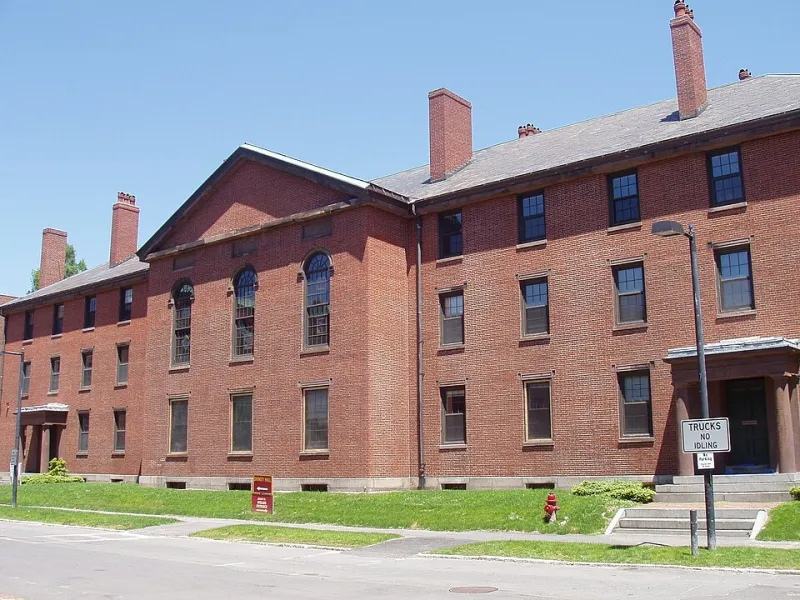
Photo: Unknown, CC BY-SA 3.0, via Wikimedia Commons
Harvard did not invite Ralph Waldo Emerson to speak on its campus for nearly thirty years after July 15, 1838. That banishment was not an accident of scheduling. It was the deliberate response of an establishment to a speech it correctly understood as an attack. The Divinity School Address — barely an hour long, delivered to a handful of students in a chapel — remains one of the most consequential acts of religious dissent in American history.
What He Actually Said
Stripped of its nineteenth-century courtesies, the Address makes three claims that were, to the clergy of Boston, genuinely alarming.
First, Emerson argued that historical Christianity had corrupted the original message of Jesus by turning a living intuition into a dead form. The miracles, he suggested, were treated as evidence when they should have been understood as symbols — 'one with the blowing clover and the falling rain.'
Second, he told the young divinity students that the pulpits of New England were dying. Preachers, he said, spoke 'as if they were sick and dead,' offering doctrine where their listeners hungered for direct experience of the divine.
Third — and this was the real heresy — he told them not to wait for permission. Revelation was not sealed. The soul's own perception of God was as valid as anything recorded in scripture. 'Cast behind you all conformity,' he urged, 'and acquaint men at first hand with Deity.'
The Backlash
The response was swift and furious. Andrews Norton, a Harvard theologian of considerable standing, called the speech 'the latest form of infidelity.' Unitarian ministers, who had spent decades softening Calvinist orthodoxy into a rational faith, discovered that Emerson had just knocked the floor out from under them too. If every soul could know God directly, what exactly were the churches for?
Emerson was not formally expelled from anything. He was simply not asked back. For a man who had left the ministry three years earlier over doubts about the communion rite, the exclusion must have stung — and it must also have confirmed something he already suspected. Institutions, he wrote elsewhere, are 'the lengthened shadow of one man.' They preserve the past at the price of the present.
Why the Scandal Was the Point
It is tempting to read the Divinity School Address as an attack on religion. It was nothing of the sort. Emerson believed in God with an intensity most of his critics could not match. What he attacked was the middleman — the idea that the divine required institutional mediation, credentialed interpretation, or historical permission.
Seen that way, the 'scandal' of 1838 marks the moment American spirituality went independent. Every later movement that located ultimate authority in the individual conscience — from Transcendentalism itself to the Quaker renewals, the humanist turn, and today's vast population of 'spiritual but not religious' Americans — walks through a door Emerson kicked open in a Harvard chapel.
The Address in an Age of Institutional Distrust
We live in an era when confidence in institutions of every kind — churches, universities, newspapers, governments — sits at historic lows. The reflexive response is nostalgia: if only the old authorities were restored. Emerson offers a different reading. Institutions decay, he would say, precisely when they stop trusting the individuals inside them. A church that cannot hear a prophet in its own chapel is already dead; a university that bans a thinker for thirty years has confessed the poverty of its own arguments.
The lesson of the Address is not that Harvard was wrong to be offended. Offense is often the honest first response to truth. The lesson is that the offense was productive: the speech was printed, debated, and ultimately vindicated. Thirty years later, Harvard invited Emerson back. In 1866, the college that had shunned him conferred an honorary doctorate.
Read the Address today and the scandal evaporates; what remains is a challenge. 'Acquaint men at first hand with Deity.' It is a sentence that asks every reader — believer or skeptic — whether they have ever met anything at first hand, or only through the reports of others. That question has not aged a day.