Before Concord, There Was Boston: Walking the Streets That Raised a Philosopher
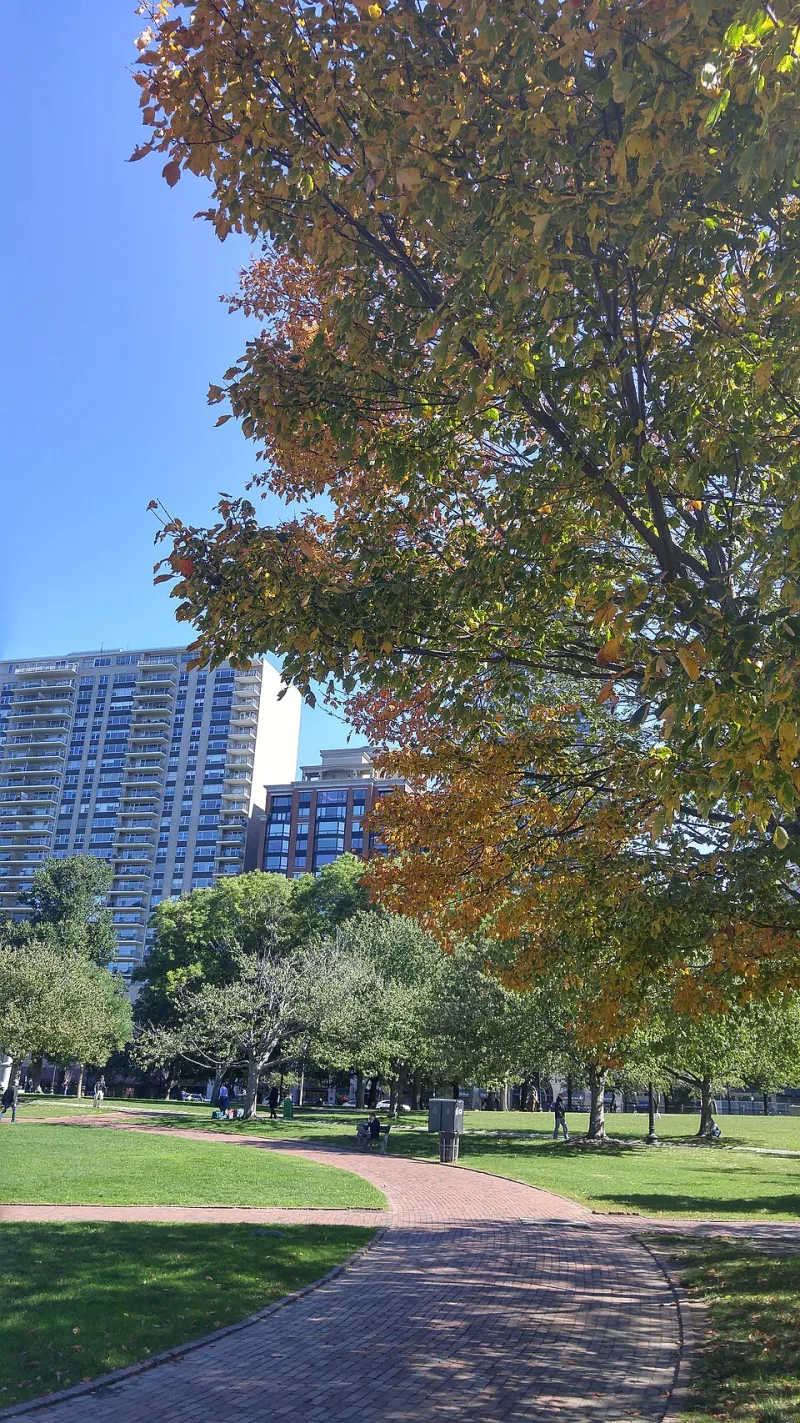
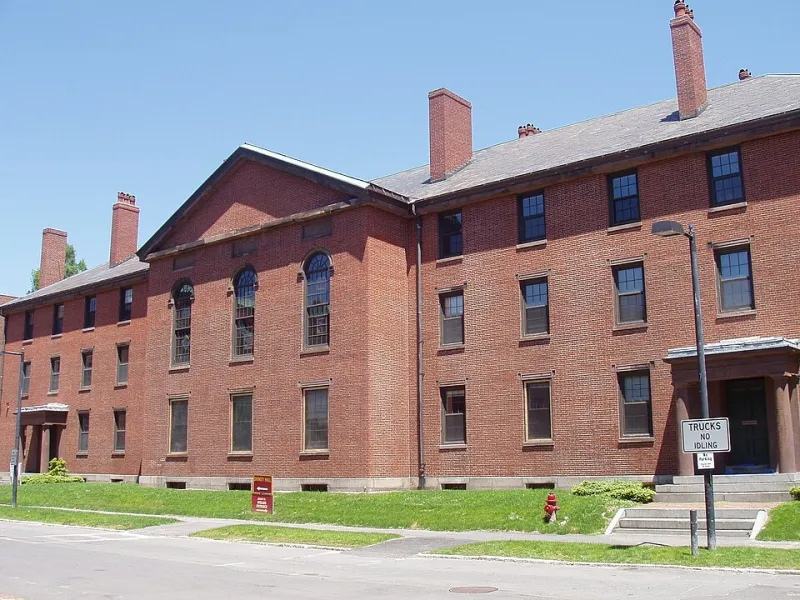
Photo: TanRo, CC BY-SA 4.0, via Wikimedia Commons
We tend to picture Ralph Waldo Emerson as a product of Concord — the sage of a sleepy country town, pencil merchant turned prophet, gazing out over fields and pines. It is a convenient image, and it is incomplete. Emerson was born in Boston in 1803, and for the first quarter-century of his life, the city was his world. Before the countryside taught him stillness, Boston taught him ambition, discipline, and the restless energy of a republic still inventing itself.
A Minister's Son in a Religious Capital
Emerson's father, William, was the minister of Boston's First Church, and the family lived in a parsonage on Summer Street. Religion was not a subject in the Emerson household; it was the air. When William died in 1811, leaving five sons and little money, the family's precarious respectability depended on education. The result was Boston Latin School, the oldest public school in America, where young Waldo was enrolled by age nine.
The school stood near the heart of the city, and the walk to it became a daily ritual: down Summer Street, past the shops and congregations of a commercial town, through or around the Common, into the shadow of Beacon Hill. Imagine a boy rehearsing Latin declensions while crossing the same grass where cattle still grazed and where the Revolution had begun barely a generation earlier. That layering — antiquity and novelty pressed together — is a Boston specialty, and it seeped into Emerson's thinking long before he named it.
The Common as First Classroom
The Boston Common deserves more credit than it usually receives in Emerson's biography. In the early nineteenth century it was the city's shared ground: a marketplace of ideas as much as a park. Orators spoke, preachers exhorted, merchants cut across the green, and schoolboys like Emerson threaded through all of it twice a day.
There is something fitting in the fact that America's first great advocate of the common individual — the writer who insisted that every person contains an original relation to the universe — grew up crossing America's oldest public common. The geography is almost too neat: democracy of the spirit, learned on democratic ground.
From Boyhood Streets to Harvard Yard
At fourteen, Emerson entered Harvard College, and Boston's orbit widened to include Cambridge. But the pattern held. He walked, he read, he absorbed the intellectual weather of Massachusetts. After college he returned to the city, taught school in Roxbury and Chelmsford, and eventually came back to Boston's pulpits before illness and doubt carried him toward the Unitarian crisis that would remake his life.
By the time he moved to Concord in 1834, the essential Emerson was already assembled. Concord did not create the philosopher; it gave the Boston boy room to finish becoming himself.
A Walking Itinerary for the Modern Pilgrim
Readers visiting Boston can retrace much of this route in an unhurried morning:
- Start at the First Church site, 66 Marlborough Street area / original Summer Street parsonage marker. Emerson's birthplace is commemorated with a tablet; the neighborhood has changed, but the streets still run on the old grid.
- Walk north to Boston Latin School's original site near School Street. The city's oldest school still operates; its first location is marked steps from King's Chapel.
- Cross the Boston Common the way a schoolboy would — no shortcut, straight across the grass toward Beacon Hill. Pause at the Frog Pond and consider that Emerson crossed here daily for years.
- Climb Beacon Hill through the narrow lanes of Acorn Street and Louisburg Square, where the Federal-era brickwork survives almost untouched.
- End at the Massachusetts State House steps and look back across the Common toward the harbor. From this vantage, a boy from Summer Street could see the whole scale of his city — small, ambitious, and utterly convinced of its own importance.
The walk takes under two hours. The ideas it produced took a lifetime. But there is a particular pleasure in standing on the Common and realizing that the thinker who told Americans to trust themselves first learned to trust his own footsteps here, on ordinary ground, in an ordinary city, walking to school.